
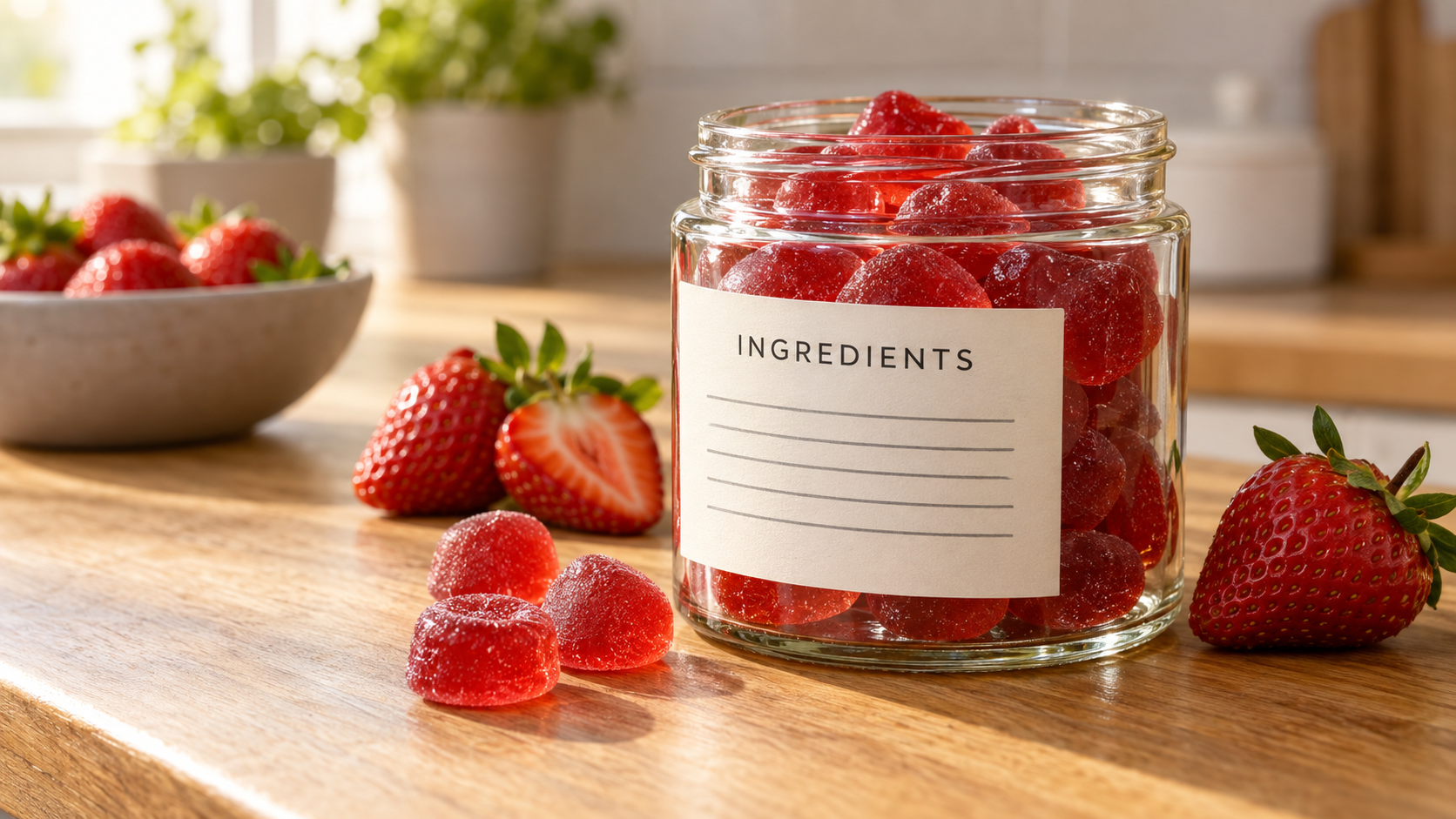
The front of a gummy package usually tells you the flavor. The back tells you much more.
Two strawberry gummies can look alike and still have different recipes. One might use gelatin, another fruit pectin. They may also use different sweeteners, coloring ingredients, and coatings. If you have dietary preferences or simply like knowing what you’re buying, those details are worth a closer look.
You don’t need to understand every part of food manufacturing to read a label. Start with a few practical questions: What gives the gummy its texture? What makes it sweet? Where does the flavor come from? And what does the stated serving actually contain?
Start With the Ingredient That Creates the Chew
A gummy needs something to hold its shape. Gelatin and pectin are two common options.
Gelatin is made from animal collagen. It gives many familiar gummy candies their stretchy, elastic texture, but it does not suit a vegan diet.
Pectin comes from plants and is also used in jams and jellies. In gummies, it provides an alternative to gelatin. The finished texture depends on the whole recipe, so don’t expect every pectin gummy to feel exactly the same.
For plant-based shoppers, checking this ingredient is a useful first step. It should not be the only step, though. A gelatin-free recipe can still contain other ingredients you prefer to avoid.
Read Past the Fruit on the Package
A picture of strawberries doesn’t tell you exactly how a gummy gets its flavor.
Read the ingredient list for fruit extracts, juices, concentrates, or other flavorings. Then check the sweeteners separately. A product can use a fruit ingredient and still contain added sugar.
Maple syrup, cane sugar, and other sweeteners all serve a purpose in a recipe. Their presence doesn’t automatically make a product better or worse; it tells you what to compare with your preferences and the nutrition information.
The same goes for color. Some gummies use fruit or vegetable ingredients, while others use different coloring agents. If the source matters to you, look for it on the label rather than judging by how bright the gummy looks.
Coatings Deserve a Look, Too
The gummy itself is only part of the recipe. Manufacturers may use oils or waxes to help keep pieces from sticking together.
For someone following a vegan diet, this is another place to check. Beeswax is animal-derived, while carnauba wax comes from palm leaves. Carmine, a coloring made from insects, is another ingredient some plant-based shoppers avoid.
A clear ingredient list makes these differences easier to spot. If the label leaves an important question unanswered, ask the manufacturer before ordering.
CBD Gummies Require an Extra Label Check
With CBD gummies, ingredients are only one part of the buying decision. You also need to know how much CBD is in each piece.
A large number on the bottle usually describes the total CBD in the container. It does not necessarily describe a single gummy. Always look for both the gummy count and the amount per piece.
Quiet Monk’s strawberry option, for example, lists 30 gummies per bottle, with 50mg of broad-spectrum CBD in each gummy and 1,500mg total. The formula uses pectin instead of gelatin and lists its sweeteners, flavoring, coloring, and coating ingredients. You can see the ingredient list here if you want a concrete example of what to check.
Those numbers help you compare products, but a stronger gummy is not automatically the right choice. Follow product directions and speak with a healthcare professional about suitability, particularly if you take medication or have health concerns.
Compare Value Without Ignoring the Recipe
Package size can make comparisons confusing. A larger bottle might contain more gummies but less CBD per piece. A smaller bottle could contain fewer, stronger gummies.
For CBD products, compare the price, total CBD, amount per gummy, and ingredients together. Check whether third-party testing is available, too.
For ordinary gummy candy, serving size and nutrition information may be more useful comparisons. Either way, avoid letting a single claim on the front of the package make the whole decision for you.
Keep the Original Container
CBD gummies can resemble regular candy, so keep them in their original labeled packaging and out of reach of children and pets. An unmarked jar or shared candy dish makes it too easy to confuse one product with another.
The label also keeps the directions and product details close at hand.
A good gummy label should answer straightforward questions without making you hunt for the basics. Once you know where to look, comparing recipes becomes easier—and you can choose based on what’s actually inside the package.
