

Fries have a short window when they are at their best: hot, crisp at the edges and easy to eat. Add cheese sauce, bacon, chili or ranch, and they become a meal of their own. But loaded fries can look terrific at the counter and arrive as a soft, crowded pile a few minutes later.
The toppings get some of the blame, but the container matters too. A paper tray and a clamshell box may both hold fries, yet they create different conditions once the food leaves the kitchen. The better choice depends on the toppings, the journey and when the customer plans to eat.
An Open Tray Lets the Fries Breathe

Paper food trays are useful when fries are being served quickly. Their open shape makes it easy for staff to portion the food, add toppings and pass the order across the counter. Customers can see what they ordered without lifting a lid, which matters when melted cheese, bacon, jalapeños or sauce are part of the appeal.
A tray also gives steam a way out. That can reduce moisture collecting around the fries, although it does not guarantee crispness. A deep pile still traps heat between layers, and wet toppings soften the pieces they touch. Trays work best when the portion is not packed too tightly and the food will be eaten soon.
Their weakness is protection. A tray can tip, sauce can run over the edge and toppings can slide when the order is carried at an angle. It is a good serving format, but not always the most forgiving travel container.
A Clamshell Keeps the Order Together
A clamshell box has a different job. Its lid and surrounding walls help contain the food, making it easier to carry alongside a burger, sandwich or drink. For a drive-through or delivery order, that extra structure can be welcome. Fries are less exposed to bumps, and heavier toppings are less likely to spill into the bag.
Closing the lid changes the atmosphere inside the box, however. Hot fries release steam. If the moisture has nowhere to go, it can condense on the lid and settle back onto the food. Fries that were crisp when packed may be soft by the time the customer opens the box.
A clamshell is not automatically wrong for fried food. Its size, depth, material and ventilation all affect performance. A box that is too deep encourages piling, while a tight, unvented lid may hold too much moisture. For loaded fries, a little headroom helps; on longer trips, sauces may be better applied sparingly or packed separately.
The Topping Matters More Than the Menu Name
“Loaded fries” covers a lot of ground. A portion with a light cheese drizzle is not the same as one covered in chili, gravy or several layers of toppings.
For dry or lightly topped fries, an open tray is often a good choice when the food will be eaten right away. It keeps the portion visible and avoids enclosing the fries in their own steam.
Heavier combinations need more support. If fries carry meat, thick sauce or plenty of melted cheese, a clamshell can keep the serving together and reduce spills. The trade-off is texture: the wetter and heavier the topping, the harder it is to keep every fry crisp, whatever container is used.
No box can make gravy behave like a dry seasoning. Restaurants can help by controlling sauce portions, offering dips on the side and avoiding piles so high that the bottom fries are crushed.
Think About the Journey, Not Just the Handoff

Someone eating at a nearby table has different needs from a customer taking an order home. The same fries may spend three minutes on a counter or twenty minutes in a car. During that time, the container is moved, tilted and sometimes placed under other items.
For a short trip, a tray may do the job and allow steam to escape. For a longer ride, a clamshell offers more protection against spills, though it should not be so sealed or oversized that it creates a damp pocket around the food.
The rest of the order matters too. A drink that tips, a burger stacked on top of the fries or a loose sauce cup can spoil the experience even if the fries container is well chosen. Packaging works as a set, not as a collection of unrelated pieces.
Other Sides Have Their Own Needs
The same decision comes up with onion rings, chicken bites, mozzarella sticks and other fried sides. A shallow tray is handy for food eaten immediately. A box with taller sides may be less messy for pieces that roll around or carry a heavier coating.
Dips deserve their own space. A sauce cup tucked beside fried food can bump against it or leak, leaving a wet patch where crispness matters. When possible, keeping dips in a separate, secure container gives customers more control and keeps the coating drier until they are ready to eat.
Test the Food, Not Just the Empty Package
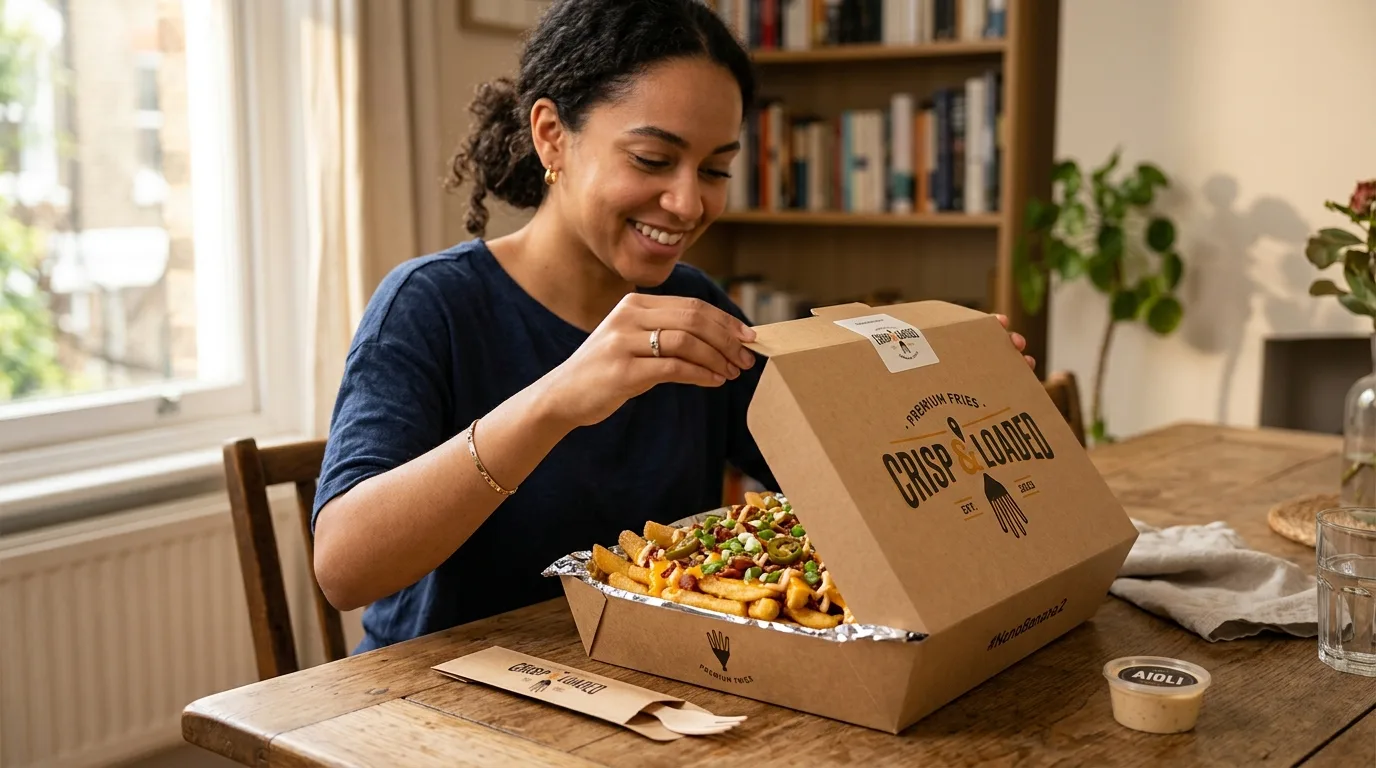
A useful comparison does not require a complicated trial. Pack the same portion in both formats and check it at the time it would normally reach the customer. Look at the bottom layer, the lid, the sauce and how much the toppings have shifted. Repeat the test after a realistic drive or delivery interval.
The answer may differ across the menu. A tray might suit plain fries and lightly topped sides, while a clamshell is more dependable for a heavier portion that has to travel. Some kitchens will need both.
Good fries deserve a package that matches the way they are served. The tray puts the food on display; the clamshell helps keep it contained. Neither wins every time. What matters is opening the order and finding something that still resembles the food the customer chose.
