
A long mountain journey becomes much easier when your daily routine is simple and organized. You do not need to carry every possible item or create a complicated system. Knowing where your important things are can save time, reduce stress, and make each trekking day more enjoyable.
The Everest Base Camp Trek with helicopter return takes travelers through different landscapes, villages, and elevations. With a little planning, you can keep your belongings under control while giving more attention to the views and experiences around you.
Pack for Real-Life Trail Conditions
Packing for a mountain trek is different from packing for a regular vacation. You may use some items several times a day while others might remain untouched for most of the journey.
Separate Daily Gear From Backup Gear
Keep things you use while walking in your daypack. Extra clothes, backup equipment, and less-used items can stay in your main luggage.
This simple separation makes it easier to find what you need without unpacking everything.
Create a Morning Routine You Can Repeat
Mountain mornings can feel busy when you are trying to prepare at the last minute. A repeated routine removes many unnecessary decisions.
Prepare Before You Go to Sleep
Choose your clothes, organize your daypack, refill your water bottle, and check your electronic devices the night before.
When morning arrives, you can focus on breakfast and getting ready instead of searching through your belongings.
Give Every Item Its Own Place
You will quickly become familiar with your bag during a multi-day trek. Make that familiarity work in your favor.
Use the Same Pockets Every Day
Keep sunscreen, sunglasses, tissues, snacks, and other frequently used items in the same accessible pocket.
When everything has a regular location, you can find it quickly even when you are tired or wearing gloves.
Make Long Walking Days Feel Smaller
A full trekking day can seem challenging if you think about the entire distance at once. Breaking it into smaller sections can make the experience feel more manageable.
Focus on the Next Stop
Use villages, rest points, or planned breaks as small goals. Once you reach one, take a moment to drink water, adjust your clothing, and prepare for the next section.
This approach can make the Everest Base Camp Trek with helicopter return feel less like one long challenge and more like a series of enjoyable stages.
Protect Your Important Information
Documents are easy to overlook when you are focused on clothing and trekking equipment. However, they are among the most important things you carry.
Keep Travel Papers Together
Use a waterproof pouch for identification, permits, insurance information, emergency contacts, and other important documents.
It is also useful to keep secure digital copies when possible. A few minutes of preparation can prevent a much bigger problem later.
Use Technology Without Depending on It
A phone can be useful for photographs, communication, navigation, and keeping notes. However, battery power may not always be available when you want it.
Save Battery During the Day
Lower the screen brightness, close apps you are not using, and switch to airplane mode when appropriate.
A power bank can also provide extra backup. These small habits help ensure your phone or camera is available when you reach a memorable viewpoint.
Keep Snacks Within Easy Reach
Food should be simple to access while walking. You should not need to remove clothing or equipment just to find a snack.
Choose One Snack Pocket
Keep your walking snacks in one consistent location. Small, easy-to-carry foods can be convenient during longer sections of the trail.
This also helps you notice when your supply is getting low so you can prepare before you need more.
Give Your Evenings a Short Reset
Once you reach your tea house, it is tempting to put everything down and forget about your bag until morning.
A quick evening reset is more useful.
Check Four Things
Before relaxing, check your clothing, water, electronics, and daypack. Then prepare anything you expect to need the next morning.
This small habit can make the following day calmer and prevent forgotten items.
Leave Space for Changing Needs
Your packing arrangement may change as you gain elevation. A jacket that seemed unnecessary earlier can become important later.
Do Not Overfill Your Luggage
Leave some space so you can rearrange your belongings as conditions change. Flexible packing is more practical than trying to keep your bag perfectly arranged throughout the entire trip.
On the Everest Base Camp Trek with helicopter return, your daily needs can change with temperature, weather, and altitude.
Keep a Simple Personal Checklist
A short checklist can help you avoid leaving things behind in tea houses.
Before departing, check for your phone, wallet, documents, water bottle, chargers, clothing, and other personal essentials.
Repeat the Same Check
Using the same checklist every morning makes it easier to remember. It takes only a few seconds but can save you from discovering a missing item much later on the trail.
Prepare Differently for the Return Flight
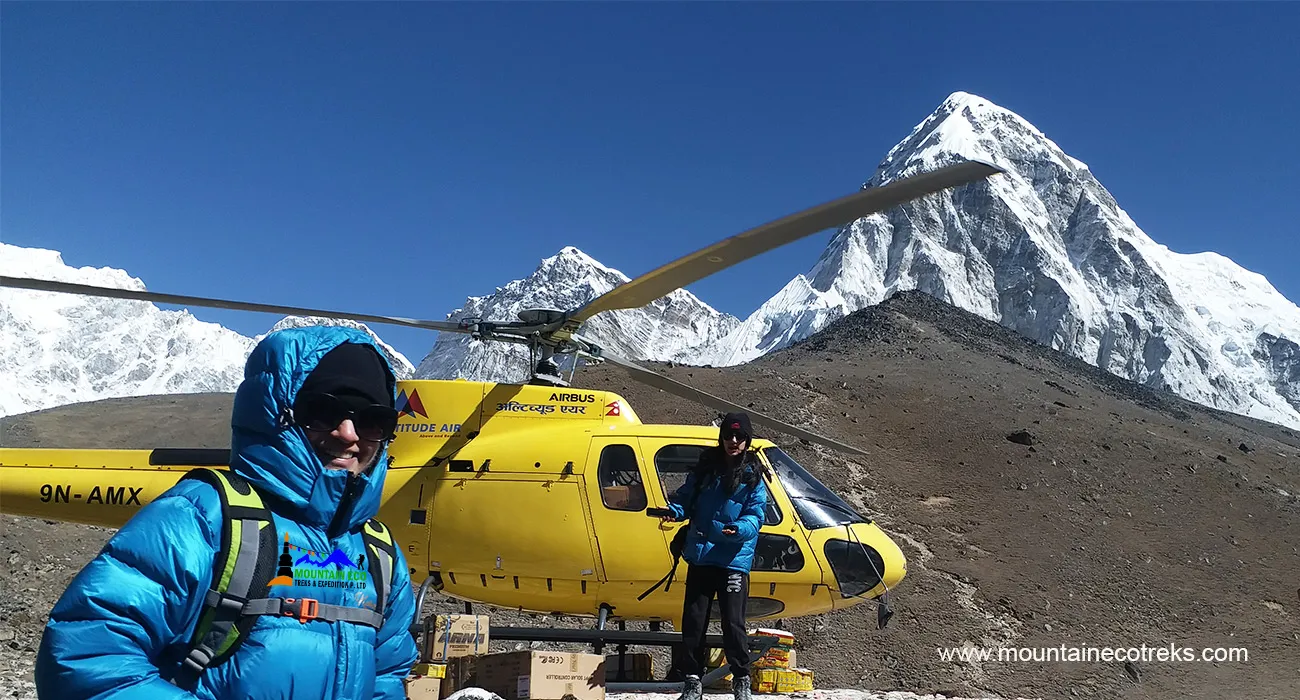
The final stage of the Everest Base Camp Trek with helicopter return has a different rhythm from the walking days.
Instead of preparing for another long trek, you will need to keep your essential belongings accessible and follow the instructions provided by your trekking team.
Stay Flexible With Flight Timing
Mountain weather can affect helicopter operations. For this reason, it is better to keep your schedule flexible and avoid planning important activities too tightly around the expected departure time.
Record the Journey While It Is Fresh
Organization can also help you preserve your memories. Create simple folders for photographs or write a few sentences about each day.
You do not need a long travel diary. A note about an interesting conversation, a beautiful viewpoint, or a memorable evening can become valuable when you look back months later.
Final Thoughts: Keep the Practical Side Simple
The Everest Base Camp Trek with helicopter return involves many moving parts, but your personal system does not have to be complicated. A well-arranged bag, a repeatable morning routine, protected documents, and a quick evening check can make a real difference.
The goal is not perfect organization. It is to spend less time worrying about your belongings and more time experiencing the mountains.
When the practical details become easier to manage, you can give your full attention to the villages, trails, people, and incredible Himalayan scenery along the way.
Frequently Asked Questions
How should I organize my trekking bag?
Keep frequently used items in accessible pockets and store backup clothing and less-used equipment deeper inside your luggage.
What should I prepare the night before?
Prepare your clothes, refill your water bottle, charge your devices, and check your daypack before going to sleep.
Is a power bank useful during the trek?
Yes. A power bank can provide backup power for your phone or camera when charging opportunities are limited.
How can I protect important documents?
Keep documents in a waterproof pouch and store them somewhere secure. Digital copies can also provide useful backup.
Does the helicopter return require flexibility?
Yes. Helicopter operations can be affected by mountain weather, so travelers should allow some flexibility in their plans.
What is the biggest benefit of staying organized?
Good organization reduces unnecessary searching and helps you start each day prepared, leaving more time to enjoy the trekking experience.
