
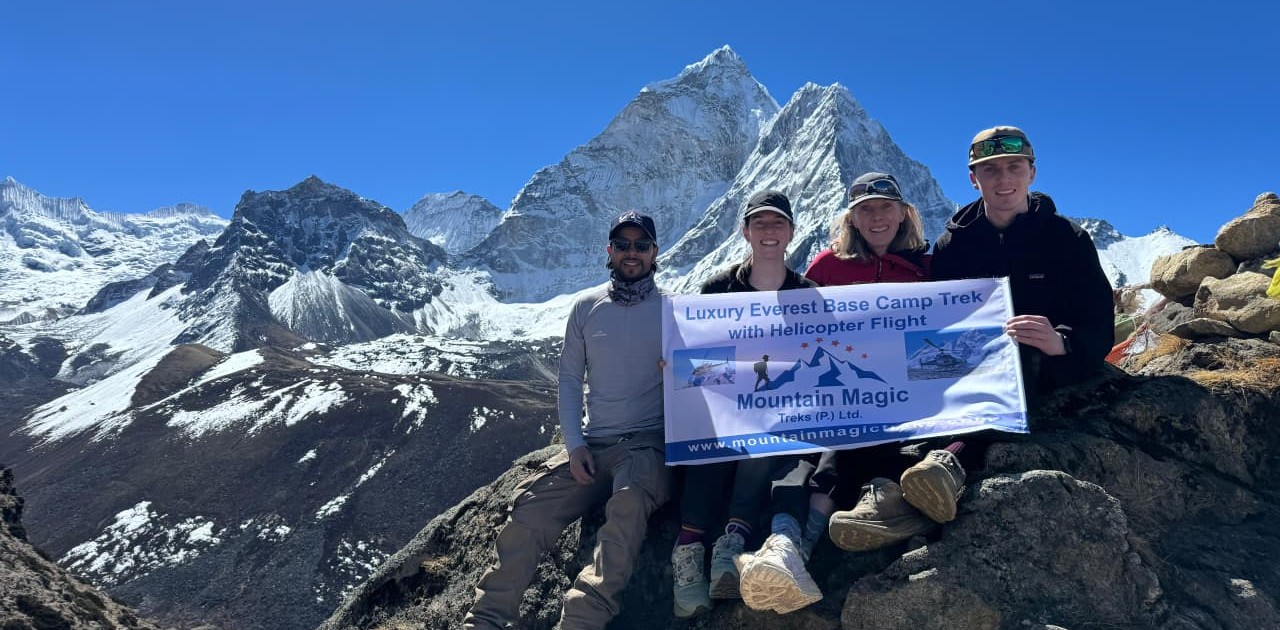
Seeing Mount Everest in person is a dream for many travelers. But the experience is not only about the mountain itself. The route through the Khumbu region brings you close to local villages, Buddhist culture, glaciers, rivers, and some of the world’s most impressive peaks.
The Everest Base Camp Trek with helicopter return offers a different way to complete this adventure. You walk through the Everest region, reach Base Camp, and then return by helicopter instead of retracing the entire route on foot. Flight operations depend on weather, visibility, and safety.
For travelers who want a memorable trek while saving time on the return journey, this option can be a smart choice.
Know What You Are Getting Into
An Everest trek is challenging, even when the return is by helicopter.
You will spend several days walking at increasing elevations. The trail includes rocky paths, stairs, steep sections, and uneven ground.
Prepare Before You Arrive
Start building your walking fitness several weeks before the trip.
Long walks, stair climbing, and hill walking can help your legs become stronger and improve your endurance.
You do not need to become an athlete. You need to become comfortable walking for several hours.
Begin Slowly Around Lukla
Lukla is where the trekking section normally begins.
The lower trail is greener and has more trees than the areas farther up the mountain.
Enjoy the First Villages
The route passes through small settlements and follows sections of the Dudh Koshi River.
You will also cross suspension bridges decorated with prayer flags.
These early days are a good time to learn how your body feels with a backpack and a regular walking schedule.
Make Namche Part of the Experience
Namche Bazaar is a major stop on the Everest route.
It has lodges, shops, cafes, and views across the surrounding mountains.
Do Not Skip Acclimatization
An acclimatization day gives your body time to adjust to altitude.
You can take a short hike around Namche, explore the town, or rest.
There is no need to spend the entire day lying down, but there is also no reason to push yourself.
Discover Sherpa Culture
The Everest region is closely connected with Sherpa communities and Buddhist traditions.
As you walk, you may see prayer wheels, mani walls, monasteries, and prayer flags.
Be a Thoughtful Traveler
Respect religious places and local customs.
Ask permission before taking close photographs of people.
Avoid leaving waste along the trail.
The mountains are not just a tourist attraction. They are home to many communities.
Take in the Views Around Tengboche
Tengboche is known for its monastery and beautiful mountain setting.
The village offers a peaceful break during the trek.
Look Away From the Camera
It is easy to spend every scenic moment taking pictures.
Instead, put your phone away sometimes.
Watch the clouds move between the peaks.
Listen to the wind.
Enjoy the quiet.
Those moments often make a stronger memory than another photograph.
Get Used to Higher Ground in Dingboche
Dingboche is another important place to spend time before climbing higher.
The landscape is more open, and vegetation becomes limited.
Expect Your Pace to Change
At higher elevations, you may need more time to walk the same distance.
That is normal.
Use shorter steps and take regular breaks.
If you feel sick or develop unusual symptoms, tell your guide immediately.
Stay Ready for Changing Weather
Mountain weather can change quickly.
A sunny morning does not guarantee a warm afternoon.
Keep Essential Gear Accessible
Your daypack should contain items you may need during the walk.
Consider carrying:
-
Water
-
Snacks
-
Sunscreen
-
Sunglasses
-
Warm layer
-
Waterproof jacket
-
Gloves
-
Hat
-
Headlamp
You do not want to unpack your entire bag every time the weather changes.
Continue Toward Lobuche
After Dingboche, the trail becomes more rugged.
The route toward Lobuche has fewer trees and more exposed terrain.
Save Energy for the High Sections
The excitement of getting closer to Everest can make you want to walk faster.
Resist that urge.
A steady pace helps you preserve energy for the final stages.
Eat regularly and drink enough water.
Spend Time in Gorakshep
Gorakshep is one of the last major stops before Base Camp.
The environment is colder and much more rugged than the lower valleys.
Focus on the Final Goal
The walk toward Base Camp can feel demanding because of the altitude.
Break the journey into smaller sections.
You do not need to think about every step remaining.
Simply keep moving at a comfortable pace.
Add Kala Patthar to the Adventure
Kala Patthar reaches approximately 5,545 meters and is one of the most popular viewpoints in the Everest region.
It offers wide views of Everest and nearby peaks.
Prepare for a Cold Climb
An early morning climb can be very cold.
Wear warm layers and move slowly because of the altitude.
The changing light across the mountains can make the viewpoint especially rewarding.
End the Trek From the Air
The Everest Base Camp Trek with helicopter return offers a different ending from a traditional round-trip trek.
After completing the trekking section, you can return by helicopter rather than walking the same route back, depending on weather and flight conditions.
See the Khumbu From Above
The aerial view gives you a new understanding of the landscape.
The trails you walked look tiny.
Villages appear between huge mountain slopes.
Glaciers and valleys spread across the horizon.
After experiencing the mountains from ground level, seeing them from the sky can be an unforgettable final part of the trip.
Leave Space for Weather Delays
Helicopter travel depends on safe conditions.
Clouds, wind, visibility, and other factors can affect operations.
Do Not Build a Tight Schedule
If you have an onward flight from Kathmandu, give yourself plenty of time.
A small delay in the mountains can affect the rest of your plans.
Flexibility is one of the most useful things to bring on an Everest trip.
Travel With the Right Expectations
The Everest Base Camp Trek with helicopter return saves time on the return journey, but it does not remove the main challenge of the trek.
You still need to walk to Base Camp.
You still need to adjust to altitude.
You still need to prepare for cold and changing weather.
The Reward Is the Complete Experience
The benefit is that you can spend your trekking days experiencing the route without using several additional days to walk back.
Then the helicopter adds an aerial perspective that a normal trek does not provide.
Final Thoughts
The Everest Base Camp Trek with helicopter return brings together adventure, culture, mountain scenery, and convenience.
You begin in the greener lower valleys around Lukla and gradually enter the high Himalayan landscape. Along the way, you experience Namche Bazaar, Tengboche, Dingboche, Lobuche, and Gorakshep.
You reach Everest Base Camp and can also experience the views from Kala Patthar.
Then you return through the sky.
For travelers with limited time, this can be a practical way to experience the Everest region without spending several more days walking back. Good preparation, sensible pacing, proper acclimatization, and a flexible schedule can make the journey far more enjoyable.
Frequently Asked Questions
Is the Everest Base Camp Trek with helicopter return physically difficult?
Yes. The trek involves long walking days, uneven terrain, and high altitude, so preparation is important.
How can I train for the trek?
Practice long walks, stairs, hills, and regular cardio before your trip.
Why is acclimatization important?
It allows your body to adjust gradually to higher elevations.
What can I see along the route?
You can see mountain villages, rivers, forests, monasteries, glaciers, suspension bridges, and major Himalayan peaks.
Can weather affect the helicopter?
Yes. Poor visibility, clouds, wind, and other conditions can cause delays or changes.
Should I keep extra days available?
Yes. Extra time is useful when traveling in the mountains because weather can be unpredictable.
