
Working outdoors comes with responsibilities that cannot always be adjusted around the weather. Delivery professionals travel across busy streets, construction workers spend hours at building sites, and field employees move between different locations throughout the day. While these jobs require physical effort and attention, personal skin protection can easily become an afterthought.
Unlike someone who spends most of the day inside an office, an outdoor worker may experience sunlight during several hours of their shift. Sweat, dust, heat, and limited opportunities for breaks can make skincare routines difficult to maintain. For people concerned about uneven skin tone, choosing a suitable Sunscreen for pigmentation concerns is one practical step toward better daily sun protection.
However, applying sunscreen once in the morning is not enough for everyone. Outdoor workers need a routine that accounts for their working conditions, exposure time, and opportunities to reapply products.
Outdoor Jobs Bring Different Sun Protection Challenges
People who work outside do not experience sunlight in exactly the same way. Their exposure depends on the type of work, location, clothing, and time spent outdoors.
A construction worker may remain at one site for most of the day, while a delivery rider travels between several destinations. A street vendor may spend long periods in the same outdoor location, and an agricultural worker may work in open fields with limited shade.
These differences matter when building a practical protection routine.
Direct exposure during working hours
People working in open environments may receive prolonged exposure to ultraviolet radiation. UVA rays contribute to premature skin ageing and pigmentation changes, while UVB rays are strongly associated with sunburn.
Repeated exposure without suitable protection can affect the skin over time.
Build a Routine That Fits a Demanding Work Schedule
Outdoor professionals often have limited time to prepare before leaving home. A complicated skincare routine is unlikely to remain consistent when someone needs to reach a worksite or complete deliveries on schedule.
A straightforward approach is more practical.
Before leaving home
Start with a clean face and apply moisturiser if your skin needs it. Follow with a broad-spectrum sunscreen offering SPF 30 or higher.
Choose a formula that feels comfortable and is suitable for your skin type. Apply enough product to cover the face, ears, neck, and other exposed areas.
A Sunscreen for hyperpigmentation concerns should also provide appropriate UVA and UVB protection. The goal is to reduce additional sun-related skin damage, not to expect sunscreen to remove existing dark marks.
During the working day
Keep sunscreen in a clean, accessible place, such as a work bag or personal storage compartment.
Reapply approximately every two hours when spending extended periods outdoors. Reapplication is also important after heavy sweating, swimming, or wiping the face.
If your work involves frequent physical movement, plan short moments for checking exposed areas and maintaining protection.
After returning home
Wash away accumulated dirt, sweat, and sunscreen using a gentle cleanser. Apply a suitable moisturiser if your skin feels dry.
Avoid aggressive scrubbing, especially when the face is already irritated from heat or friction.
A consistent evening routine can help keep your skin comfortable after a demanding workday.
Protective Clothing Can Reduce Dependence on Skincare Alone
Sunscreen is important, but it should not be the only part of an outdoor protection routine.
Clothing and physical barriers can reduce the amount of sunlight reaching exposed skin.
Consider these practical options:
-
Long-sleeved clothing: Lightweight, tightly woven fabrics can provide additional coverage.
-
Wide-brimmed hats: These help protect the face, ears, and neck.
-
UV-protective sunglasses: They help protect the eyes and surrounding areas.
-
Helmets with visors: Useful for riders who spend long hours travelling.
-
Shade breaks: Use covered areas whenever working conditions allow.
-
UPF clothing: Specially designed garments offer a measurable level of ultraviolet protection.
For people working on construction sites or in industrial environments, protective clothing must also meet workplace safety requirements. Sun protection should never interfere with essential equipment.
How to Choose Sunscreen for Physically Active Work
A sunscreen that feels comfortable during a short office commute may not be equally convenient during a full outdoor shift.
People who sweat frequently should pay attention to product instructions, water-resistance claims, and texture.
Here are some factors worth considering:
Broad-spectrum protection: Choose a product that protects against both UVA and UVB radiation.
SPF rating: SPF 30 or higher is a practical starting point for regular outdoor exposure.
Water resistance: A water-resistant formula may be useful for people who sweat heavily. Check the stated duration because water resistance does not mean all-day protection.
Comfortable texture: A formula that spreads easily and feels comfortable may be easier to use consistently.
Packaging: A convenient container makes carrying and reapplying sunscreen more manageable.
People looking for a Sunscreen for pigmentation concerns should avoid judging a product only by its brightening ingredients or advertising claims. Its actual sun protection, application instructions, and suitability for regular use deserve more attention.
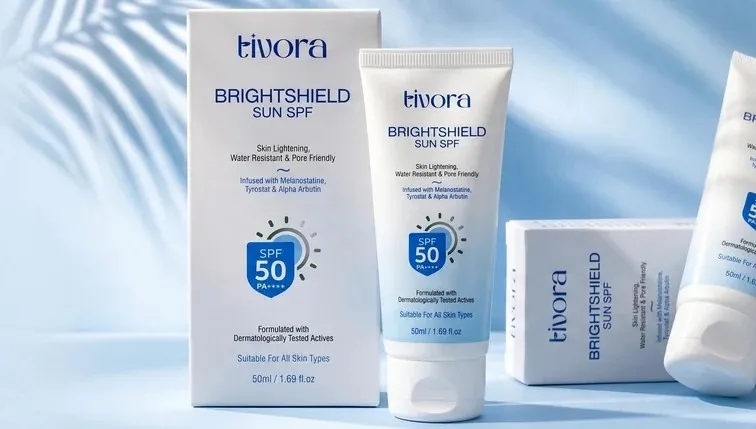
Tivora BrightShield SPF 50 PA++++ is one product option worth evaluating. Its formula includes Alpha Arbutin, Tyrostat, and Melanostatin, with a lightweight texture and no-white-cast positioning. Outdoor workers should still check its usage instructions and water-resistance information rather than assume that it is suitable for every demanding working condition.
Common Sun Protection Mistakes Among Outdoor Workers
Even people who understand the importance of sunscreen may struggle with consistent application.
Some common mistakes include:
-
Applying sunscreen only to the cheeks and forehead while forgetting the ears and neck.
-
Using a very small amount to make the product last longer.
-
Assuming a single morning application provides protection throughout an entire shift.
-
Wiping sweat away repeatedly without considering sunscreen reapplication.
-
Depending only on a cap or helmet while leaving other areas exposed.
-
Ignoring sun protection on cloudy days.
Correcting these habits does not require expensive skincare products. It requires better preparation and a realistic routine.
Final Thoughts
Outdoor work makes skin protection more challenging, but it also makes consistency more important. Long shifts, repeated travel, sweating, and limited breaks can all affect how well a person maintains their skincare routine.
A practical approach combines sunscreen, protective clothing, shade whenever possible, and regular reapplication. People concerned about uneven skin tone can include a suitable Sunscreen for hyperpigmentation concerns in their daily routine as part of a broader skin protection plan.
The most useful routine is one that fits your working conditions. Prepare before leaving home, carry sunscreen during your shift, and avoid treating sun protection as something reserved for holidays. Small habits maintained throughout the year can make a meaningful difference to everyday skin care.
