
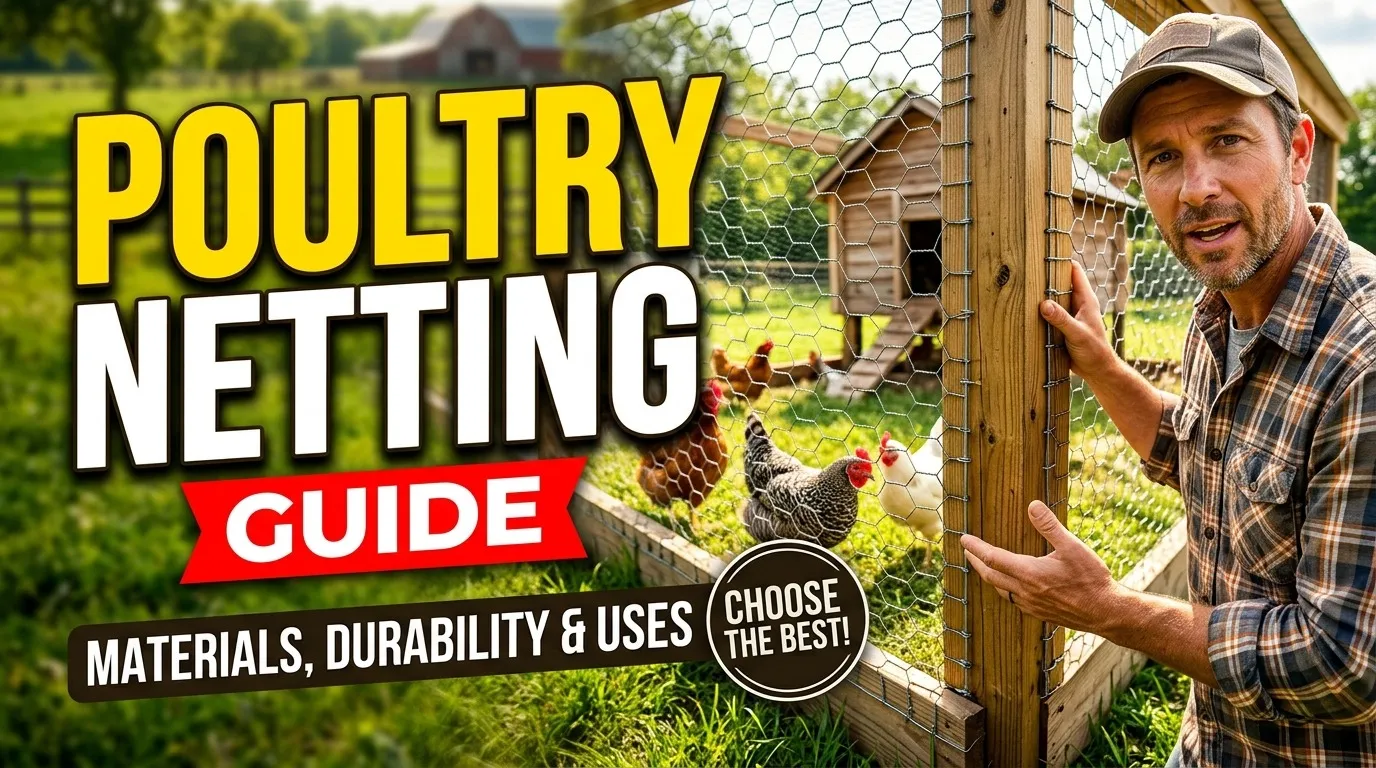
A chicken run is only as secure as its weakest section of fencing. Poultry netting keeps birds in, keeps many predators out, and protects gardens from scratching hens. The wrong choice can fail within a season through rust, sagging, or a determined raccoon. This guide compares common materials and covers durability, mesh size, installation, and Canadian conditions so you can plan a safer enclosure.
What Poultry Netting Is and How It Works
Poultry netting is fencing with small openings, designed to contain birds such as chickens, ducks, geese, and turkeys. It works in two ways:
-
Physical barrier: the mesh size, height, and material strength block movement.
-
Electric deterrent: an energizer sends a pulse through the netting, so animals learn to avoid touching it.
Retailers use many terms, including chicken netting, poultry fencing, poultry wire mesh, and chicken enclosure netting. They often overlap, so check the material, mesh size, and height before you buy.
Common Poultry Netting Materials
Plastic Poultry Netting
Plastic netting is light and easy to handle. It suits temporary borders, garden protection, and keeping birds off plants. It offers little resistance to chewing or pushing, so it is not a dependable predator barrier. Prolonged sun exposure can also make some plastics brittle.
Galvanized Poultry Netting
Galvanized poultry netting, often called chicken wire, is woven wire with hexagonal openings and a zinc coating to slow rust. It contains chickens well, but university extension guidance ranks it among the weaker choices against predators. Raccoons can tear it or reach through it.
Welded Wire and Hardware Cloth
Welded wire has its wires fused at each intersection, which gives a rigid square grid. Hardware cloth is a finer version, commonly ½ inch. Both cost more than woven wire but resist tearing far better, which makes them popular for predator-resistant fencing. Look for a galvanized coating and ask how it was applied.
Electric Netting
Electric netting is lightweight, portable fencing with built-in conductive strands. It suits rotational pasture and flocks that need to be moved often. The poultry category at FenceFast poultry netting lists electric netting rolls, such as 106 cm by 50 m, alongside energizers, fiberglass posts, and accessories. Its guidance recommends an energizer of at least 1 joule, or 3 joules where grass is tall or predator pressure is high.
Lightweight vs. Heavy-Duty Netting
Lightweight options (plastic or thin woven wire):
-
Easier to carry, cut, and reposition
-
Suited to garden protection, short-term pens, and calm flocks
-
Less suited to areas with strong predator pressure
Heavy-duty options (welded wire, hardware cloth, or electrified netting with strong posts):
-
Better resistance to chewing, climbing, and pushing
-
Suited to permanent runs and rural sites with foxes, coyotes, or raccoons
-
Higher cost and more installation effort
Durability and Weather Resistance
No single lifespan applies to every product. Durability depends on several factors:
-
Material quality: thicker wire and consistent coatings last longer.
-
Corrosion resistance: zinc coatings slow rust, but scratches and constant soil contact can expose bare steel.
-
Sun and weather: ultraviolet light, rain, and freeze-thaw cycles wear down plastics and fittings.
-
Tension and support: sagging mesh stresses joints and creates gaps.
-
Animal pressure: pushing, digging, and chewing shorten service life.
Inspect any fencing after storms and heavy snow, and replace damaged sections early.
Choosing Mesh Size and Netting Height
Mesh size matters as much as strength. Extension guidance advises small-mesh materials when raccoons, mink, or similar animals are present, especially in fully enclosed runs.
-
Adult chickens: moderate openings can contain them but offer little predator protection.
-
Chicks and ducklings: use finer mesh so they cannot slip through.
-
Predator-prone sites: ½ inch hardware cloth is a common choice.
For height, many poultry netting products range from about 3 to 4 feet. Flight-prone breeds may need taller fencing or a covered top. Covering the run with mesh or netting also helps against hawks and owls.
Predator Protection and Enclosure Planning
Netting is one part of a layered plan. Virginia Cooperative Extension notes that keeping poultry fully confined with fencing and covered runs is the best protection from predators. Most predation happens at night, so a secure, locked coop matters too.
Consider these planning points:
-
Stop diggers: University of Maryland Extension suggests burying fencing at least a foot deep, then turning it outward 8 to 10 inches.
-
Add an electric strand: a low electrified wire outside the fence can discourage digging and climbing.
-
Close gaps: check corners, gates, and the base of the fence.
-
Think about wild birds: the Canadian Food Inspection Agency advises keeping wild birds and other animals away from flocks to reduce disease risk.
Practical Uses for Poultry Netting
-
Chicken runs: welded wire or hardware cloth on permanent runs, with a covered top.
-
Rotational pasture: portable electric netting that moves with the flock, giving birds fresh ground.
-
Ducks and geese: these birds push against fences, so choose sturdy materials and strong posts.
-
Garden protection: lightweight netting keeps hens away from vegetable beds.
Installation and Maintenance Basics
-
Set strong corner and gate posts first, since they carry the tension.
-
Keep the bottom edge tight to the ground, with no gaps.
-
Space posts as the manufacturer recommends.
-
Clear grass and weeds along the base, especially with electric netting.
-
Check grounding and voltage regularly on electric systems.
-
Repair sagging, loose fasteners, and damaged mesh promptly.
Factors to Consider in Canada
Canadian conditions add a few extra checks:
-
Winter: snow load, frozen ground, and moisture can affect tension and electrical grounding.
-
Wildlife: foxes, coyotes, raccoons, and in some regions bears may require stronger systems.
-
Seasonal use: solar energizers are practical for summer use, while winter use may call for mains or multi-power units.
-
Local rules: check municipal bylaws on coops, runs, and setbacks.
For flocks that move between pastures, FenceFast poultry netting is one example of a Canadian retailer’s range. It notes that snow, frozen ground, and moisture can influence grounding, so deep ground rods and regular voltage checks are advised.
Conclusion
The best poultry netting depends on your flock, your site, and the predators nearby. Plastic and lightweight wire suit short-term and garden uses, while welded wire and hardware cloth suit permanent runs. Electric netting adds flexibility for moving flocks. Whatever you choose, match the mesh size, height, and burial depth to the real threats on your property, and maintain the fence regularly.
Frequently Asked Questions
What material is best for poultry netting?
It depends on the purpose. Galvanized welded wire or hardware cloth suits permanent, predator-prone runs. Plastic suits light, temporary tasks, and electric netting suits movable pens.
How long does poultry netting typically last?
There is no fixed number. Lifespan depends on material quality, coating, weather exposure, tension, and animal pressure. Regular inspection helps you spot wear early.
What mesh size is suitable for chicken enclosures?
Larger openings can hold adult chickens, but smaller mesh protects better against raccoons and mink. Chicks and ducklings need finer mesh still.
Can poultry netting help protect chickens from predators?
Yes, when the mesh is strong and small enough, the base is secured against digging, and the run is covered. Basic chicken wire alone is a weak barrier.
How should poultry netting be maintained?
Check for sagging, gaps, rust, and damage often, especially after storms. Keep vegetation away from the base. On electric systems, also verify grounding and voltage.
References
-
Canadian Food Inspection Agency. Biosecurity basics for small flock owners
-
Colorado State University Extension. Chickens and Predators
-
Virginia Cooperative Extension. Small-scale Poultry Housing
-
University of Maryland Extension. Identifying and Preventing Poultry Predators in the Mid-Atlantic Region
