
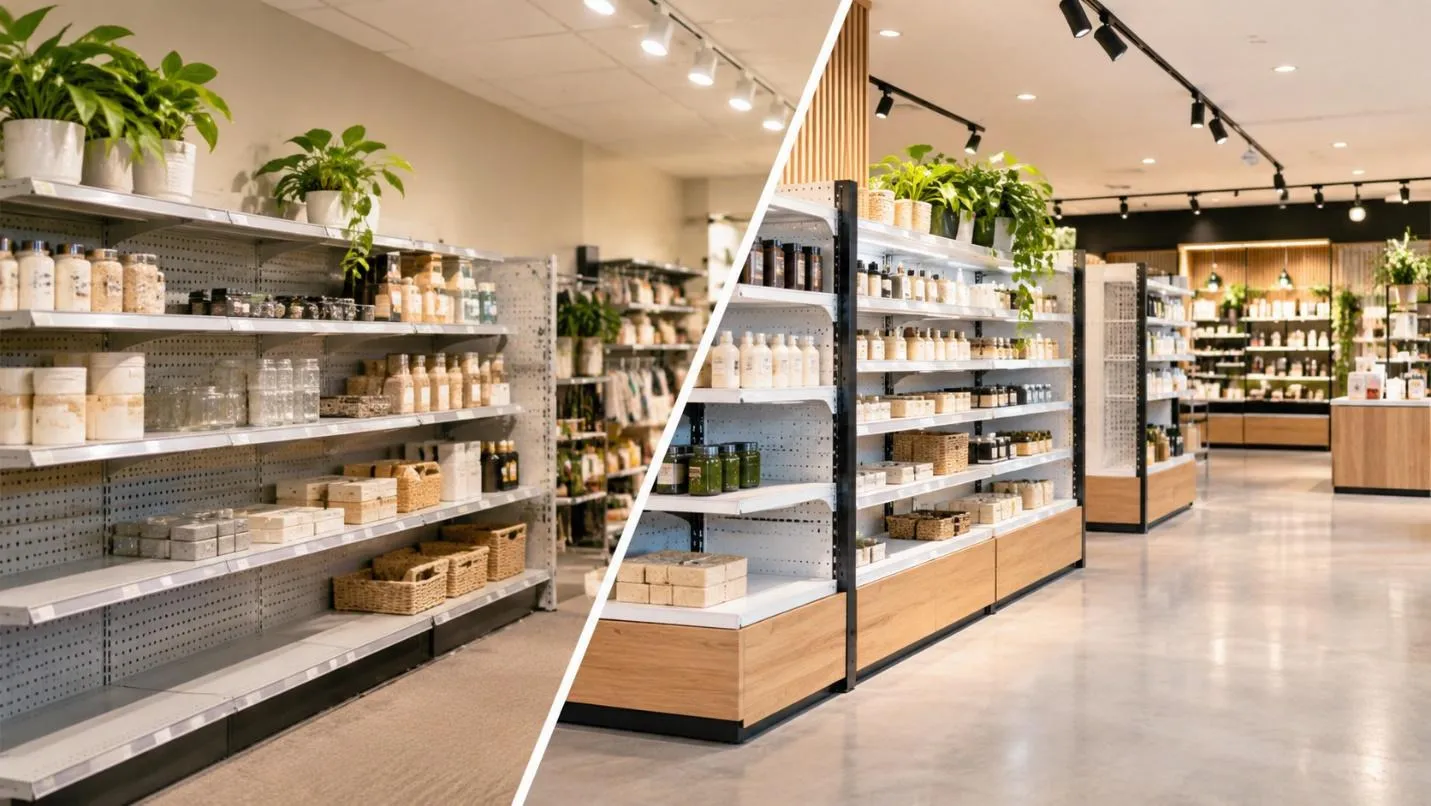
An outdated retail store doesn’t always need a complete renovation. Sometimes, improving the lighting, rearranging displays or replacing a few fixtures is enough to make the space more functional and appealing.
For Australian retailers, knowing when to refresh an existing store and when to invest in a full refit can make a significant difference to costs, daily operations and customer experience.
The right decision depends on more than appearance. Store layout, shelving condition, product requirements and future business plans all need consideration before committing to improvements.
What’s the Difference Between a Store Refresh and a Full Refit?
A store refresh involves improving the appearance and functionality of an existing retail space without making substantial structural or layout changes.
This might include repainting walls, upgrading lighting, updating signage, repositioning displays or replacing selected shelving components.
A full refit involves more extensive work. It can include replacing shelving systems, redesigning aisles, installing new fixtures and making changes to electrical, flooring or other building infrastructure.
The distinction matters because both approaches involve different levels of investment and disruption.
A refresh is generally more suitable when the existing store layout works well but needs updating. A refit becomes necessary when the current configuration no longer supports the business’s operational requirements.
Five Signs Your Store Only Needs a Refresh
Before planning a complete refurbishment, consider whether smaller improvements could address the problems affecting your store.
1. Your shelving is still in good condition
If the existing fixtures remain stable, secure and suitable for their intended loads, replacing them entirely may be unnecessary. Adjusting shelf heights or introducing compatible accessories could improve product presentation.
Retailers exploring these options can consider modular shelving solutions from Mills Shelving, which allow stores to adapt displays as merchandising requirements change.
2. Customers can move comfortably through the store
When aisles are accessible and shoppers can navigate the space easily, the existing layout may only require minor adjustments.
3. Your displays look outdated
Older signage, inconsistent lighting and poorly arranged merchandise can make an otherwise functional store appear neglected. Updating these elements can improve presentation without major construction work.
4. Your floor plan still supports your products
If shelving dimensions, stock capacity and display areas remain appropriate for your merchandise, a complete redesign may offer limited practical benefit.
5. Your budget favours targeted improvements
When funds are limited, prioritising improvements that address identifiable problems can be more practical than replacing fixtures that still perform their intended function.
When a Complete Store Refit Makes More Sense
While a refresh can improve presentation, some problems require more substantial changes.
A full refit may be appropriate when shelving has deteriorated, fixtures cannot safely accommodate merchandise or the existing layout restricts everyday operations.
For example, a convenience store that has expanded its grocery range may struggle with shelving originally designed for a smaller selection of products. Similarly, a specialty retailer introducing larger merchandise may need different shelf depths, display configurations and storage capacity.
Customer movement also deserves consideration. Narrow aisles, poorly positioned displays and overcrowded merchandising zones can make shopping difficult.
A refit provides an opportunity to reconsider the store’s overall layout rather than repeatedly adjusting individual fixtures.
However, replacing everything should not be the automatic response. Retailers should first identify which elements genuinely require replacement and which can remain.
The Hidden Costs of Making the Wrong Decision
Choosing between a refresh and a refit involves more than comparing initial quotations.
A complete refurbishment can introduce expenses associated with installation, removing existing fixtures, relocating stock and temporarily restricting trading areas.
Replacing functional shelving unnecessarily can also increase project costs without delivering proportional improvements.
On the other hand, choosing a cosmetic refresh when the underlying layout is unsuitable may simply postpone more expensive work.
For example, repainting shelves will not address insufficient load capacity, while adding more displays to an already crowded shop could make customer movement worse.
Experience supplying commercial shelving to Australian retailers has highlighted an important consideration for Mills Shelving: fixtures need to remain practical as product ranges, store layouts and merchandising requirements evolve.
Evaluating long-term suitability alongside immediate costs helps retailers avoid investing in improvements that may need to be repeated.
What Retailers Should Assess Before Spending Money
A practical store assessment can help establish whether existing problems require minor improvements or more extensive changes.
Customer Movement and Accessibility
Observe how customers navigate the store during busy trading periods.
Look for congested aisles, displays that obstruct movement and product areas that are difficult to access.
Accessibility and workplace safety should also influence layout decisions.
Safe Work Australia identifies slips, trips, falls and hazardous manual handling among common risks in retail environments. Its guidance recommends appropriate workplace layouts, clear floors and suitable equipment to help manage these hazards.
Shelving Condition and Flexibility
Inspect existing shelving for damage, instability and signs of wear.
Check whether fixtures remain suitable for the weight and dimensions of displayed products. Where adjustments are required, confirm that replacement shelves and accessories are compatible with the existing system.
Modular shelving can be particularly useful because individual components may be adjusted or expanded without replacing complete shelving runs.
Budget and Trading Disruption
Compare the full costs of each option, including materials, labour, installation and potential interruptions to trading.
Consider whether improvements can be completed in stages rather than closing the entire store.
A staged approach may allow retailers to prioritise the most important areas while keeping other sections operational.
Why Flexible Shelving Can Reduce Future Refit Costs
Retail requirements rarely remain unchanged. New products, seasonal promotions and changing customer preferences often require adjustments to merchandising layouts.
According to Neil Webster, CEO of Mills Shelving, choosing shelving based solely on immediate requirements can limit a retailer’s ability to adapt as the business develops. Modular systems offer greater flexibility because compatible shelves and accessories can be repositioned or added as product ranges change. Rather than replacing entire fixtures whenever merchandising needs evolve, retailers can make targeted adjustments while retaining suitable existing infrastructure. This approach places greater emphasis on long-term functionality than short-term appearance alone.
For retailers planning improvements, this means considering how shelving will perform beyond the initial installation.
A flexible system can support different product categories, allow adjustments to display heights and accommodate changes in stock presentation.
However, compatibility remains important. Not every component fits every shelving system, so retailers should confirm product specifications before ordering additions or replacements.
A Practical Checklist for Choosing Between a Refresh and a Refit
The following framework can help retailers determine the appropriate level of improvement.
Choose a refresh when:
- Existing fixtures remain safe and functional.
- The floor plan supports customer movement.
- Improvements are primarily cosmetic.
- Product display requirements have not changed significantly.
Consider a partial refit when:
- Specific shelving runs need replacing.
- Certain departments require different fixtures.
- Additional display capacity is needed in selected areas.
- Most of the existing layout remains suitable.
Consider a full refit when:
- Major fixtures are deteriorating or unsuitable.
- The current layout restricts operations.
- Product requirements have changed substantially.
- Extensive building or infrastructure changes are necessary.
The decision should ultimately reflect the store’s actual operational needs rather than a preference for making everything look new.
Final Thoughts
Improving a retail store doesn’t always require starting from scratch.
For some businesses, better lighting, updated displays and a revised shelving arrangement can deliver meaningful improvements. Others may benefit from replacing unsuitable fixtures or redesigning the entire floor plan.
The priority is identifying what currently limits the store’s performance and selecting improvements that address those issues.
By considering shelving condition, customer movement, costs and future requirements, retailers can make informed decisions that improve their stores without unnecessary expenditure.
