
Ask what Peruvians eat for breakfast, and the answer is usually a pause. Breakfast rarely gets the spotlight, yet it tells you a lot about how people live, what grows nearby, and how a country starts its day.Ask a visitor about Peruvian food, and they will probably mention ceviche, lomo saltado or a pisco sour.
The short answer is that there is no single Peruvian breakfast. A fresh bread roll with butter in Lima, a bowl of warm quinoa in the mountains, and a pork sandwich on a Sunday morning are all completely normal. This guide explains the main styles, the drinks that go with them, and a few easy ideas you can try in your own kitchen.
Light Breakfast, Big Lunch
In Peru, lunch (almuerzo) is usually the biggest meal of the day. Because of that, breakfast on a regular weekday tends to be simple and quick. Many people eat something small before work or school and save their appetite for later.
Weekends are different. Families have more time, street vendors set up early, and breakfast becomes a slower and bigger meal. That is when you will see tamales, fried pork sandwiches and long mornings around the table.
Coastal Mornings: Bread, Eggs and Fruit
On the coast, and especially in Lima, bread is the center of breakfast. The classic roll is called pan francés. It has a crisp crust and a soft, airy inside, and neighborhood bakeries bake it fresh every morning. Many families buy it just before they sit down to eat.
Here are a few simple ways people enjoy it:
- With butter or cheese. This is the simplest option, and it is still very common.
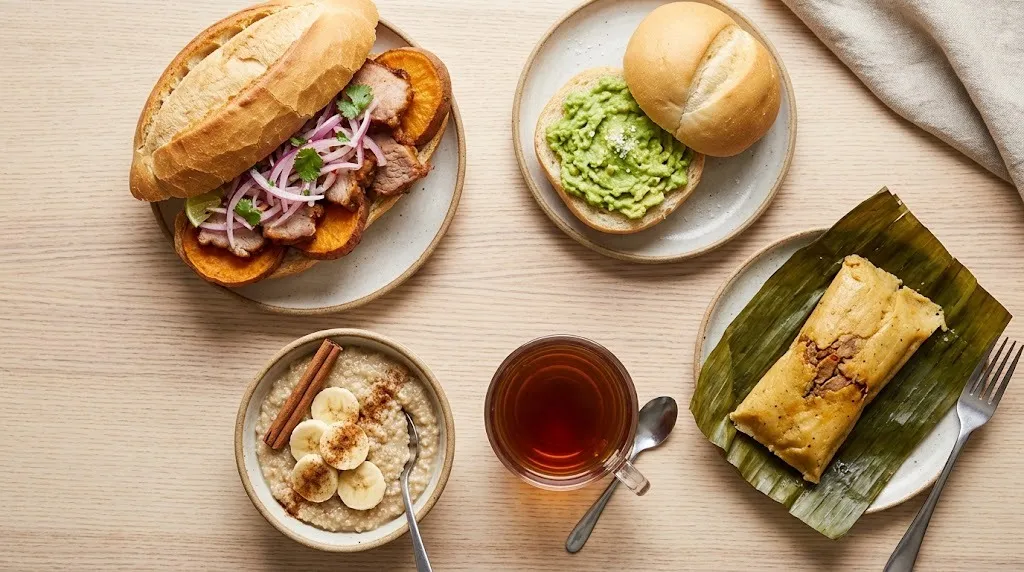
- With avocado (pan con palta). Ripe avocado is mashed onto the bread with a pinch of salt. Some people add a slice of cheese or tomato.
- With a fried or scrambled egg. It is often served as a small sandwich that is easy to eat on the way out the door.
- With ham or cheese. Quick bakery sandwiches are popular when time is short.
Fresh fruit often joins the table too. Papaya, banana, mango and oranges are easy to find, and many homes serve juice made that same morning instead of juice from a carton.
Weekend Favorites: Pan con Chicharrón and Tamales
When there is time to enjoy breakfast, two dishes come up again and again.
Pan con chicharrón. Many people think of this as the king of weekend breakfasts in Lima. Pieces of fried pork are tucked into a crusty roll with slices of sweet potato and a tangy red onion salad called salsa criolla. The sweet potato balances the rich pork, and the onion adds a sharp, fresh bite. It is hearty, a little messy and very satisfying.
Tamales. Peruvian tamales are made from corn dough and are often filled with pork or chicken. Some also include an olive or a slice of boiled egg. They are wrapped in banana leaves or corn husks and steamed until soft. They are easy to carry, which is one reason many people pick one up from a street vendor in the morning.
If you want more detail on these dishes, along with a few recipes to try at home, this full guide to traditional Peruvian breakfast dishes is a good next read.
Mountain Mornings: Corn, Quinoa and Warm Foods
In the highlands, the ingredients change. Corn and grains play a much bigger role, and the weather is cooler, so warm foods are popular.
Quinoa porridge. Quinoa is cooked slowly in milk with cinnamon and a little sugar until it turns creamy, much like oatmeal. It is filling, naturally gluten-free and a good source of protein, which is helpful on cold mornings before a long active day.
Humitas. These are made from fresh corn blended with a little cheese, then wrapped in corn husks and steamed. They come in savory and sweet versions. The texture is soft and tender, a bit like a thick corn pudding.
Corn with cheese. In some areas, large-kernel Andean corn, called choclo, is served with a slice of fresh cheese. It is simple, hearty and a familiar part of daily meals in the mountains.
What Peruvians Drink With Breakfast
The drinks are just as interesting as the food.
- Coffee with milk. Many homes drink coffee with hot milk. Some families use a strong coffee concentrate, often called esencia de café, and mix it with warm milk or water.
- Fresh juice. Orange, papaya and passion fruit juices are common, and many people make them fresh at home or buy them from small juice stands.
- Emoliente. This is a warm herbal drink made from barley, flaxseed and a mix of herbs, often finished with a squeeze of lime. Street carts sell it in the early morning. It has a slightly thick texture and a mild, earthy taste, and many people drink it because they find it soothing.
- Avena. A warm, thin oat drink made with milk and spices like cinnamon and cloves. It is comforting on a cold morning.
- Quinoa drink. This is a thinner version of quinoa porridge that you can drink from a cup.
Try It at Home: Two Easy Peruvian Breakfasts
You do not need rare ingredients to try Peruvian breakfast. These two ideas use things you can find in most stores.
Pan con Palta (Avocado on Bread)
Serves 2 | Prep time: 5 minutes
- 2 crusty bread rolls
- 1 ripe avocado
- A pinch of salt
- A few drops of lime juice
- Optional: 2 slices of fresh cheese
Split the rolls. Mash the avocado with the salt and lime juice, spread it on the bread, and add the cheese if you like. Eat right away while the bread is fresh.
Simple Quinoa Porridge
Serves 2 | Prep time: 5 minutes | Cook time: 20 minutes
- 1/2 cup quinoa, rinsed well
- 2 cups milk
- 1 cinnamon stick
- 2 tablespoons honey or sugar
- Sliced banana or other fruit, for topping
Put the quinoa, milk and cinnamon stick in a small pot. Bring to a gentle boil, then lower the heat, cover and cook for 18 to 20 minutes. Stir now and then. The porridge is ready when the quinoa is soft and the mixture looks creamy. Take out the cinnamon stick, stir in the honey, and top with fruit.
Tips for Trying Peruvian Breakfast When You Travel
If you get the chance to eat breakfast in Peru, a few small habits can make it better.
- Start at a local bakery. Fresh bread is one of the easiest ways to taste daily life.
- Go early on weekends. Tamales and pan con chicharrón are often at their best in the morning, and popular stalls can sell out.
- Choose busy stalls. A line of local customers usually means the food is fresh and cooked hot.
- Try one savory and one sweet dish. Peruvian mornings can go either way, so it helps to taste both.
- Ask what is fresh that day. Vendors are often happy to explain what they are selling.
Final Thoughts
Peruvian breakfast is not about fancy plates. It is about fresh bread, local corn and grains, warm drinks and food that fits the pace of the day. Whether it is a quick roll with avocado on a weekday or a long weekend morning with tamales, each version shows a different side of Peru. Start with one of the simple ideas above, and you may find that breakfast becomes your favorite way to explore the country’s food.
About the author: Anna Rehman writes about Peruvian recipes and food culture at Peruvian Spice.
