
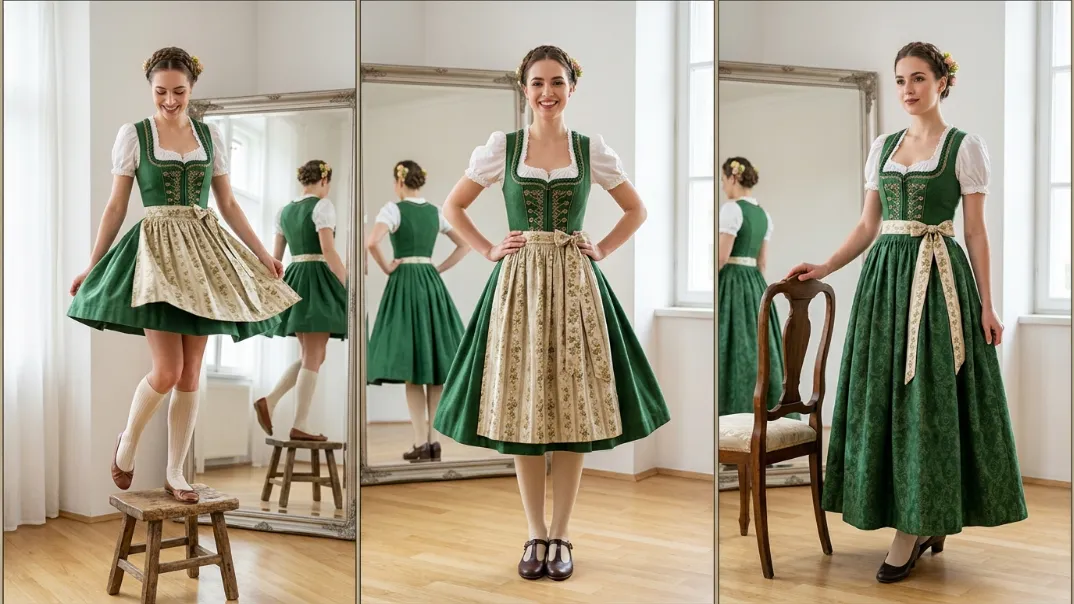
Below every dirndl’s waist seam, the real decisions happen. The dirndl skirt — its length, its fullness, its fabric weight and swing — sets the dress’s entire silhouette and most of its register: the difference between playful festival mini, all-purpose modern classic and floor-length ceremony lives in the hem, and the difference between a skirt that moves like the tradition intends and one that hangs like a costume lives in the gathering above it. Buyers who understand the skirt buy the whole dress better. This guide covers the lower half completely: the length ladder and what each rung signals, the fullness engineering that makes the swing, the midi’s rise to modern standard, the pairing logic downward to stockings and shoes, and the quality checks that read a skirt from a listing photo.
The Length Ladder: What Each Hem Says
Dirndl lengths form a codified ladder, read fluently at every festival. The mini (well above the knee): the party register — young festival energy, strongest at daytime events and casual tents, the length that trades tradition-weight for playfulness. The midi (hem at or just below the knee): the modern standard — correct from festival grounds to evening tents, the length the contemporary tradition converged on. The long midi and calf lengths: the elevated middle — leaning romantic and vintage, at home at nicer occasions. The floor length: ceremony territory — weddings, balls, formal Trachten events, where the full-length line carries the tradition’s most formal register.
The ladder’s working rule mirrors every register system in the tradition: longer equals more formal — one dial, read identically by every tent on earth.
Fullness: The Engineering of the Swing
The skirt’s second signature is volume, and it’s built, not implied. Traditional construction gathers or pleats a wide panel of fabric — genuinely multiple times the waist measurement — into the waist seam, producing the fullness that gives the dirndl its bell-line silhouette, its walk-and-twirl movement, and the drape that photographs richly instead of hanging flat. Fabric weight completes the engineering: substantial cotton and cotton blends hold the bell shape and swing with momentum; the costume tier’s thin polyester collapses against the legs and betrays the whole dress at the first step.
The listing-photo check that reads it: look for real gathering density at the waist seam and a hem that stands away from the body in motion shots — flat hems and skimpy gathers are the shell tier photographing its shortcut.
The Midi Standard: Why the Middle Won
The midi dirndl earned its modern-standard status on pure range. Register: correct at every occasion the festival calendar produces — daytime grounds, evening tents, dinners, most weddings-as-guest — the one length with no wrong room. Practicality: full movement for bench-dancing and festival days, hem clear of the ground’s realities, and the proportions that flatter the widest range of heights and figures. Tradition: the knee-length line sits squarely inside the classic silhouette, satisfying the strictest tents while staying contemporary.
The buying consequence is the category’s clearest recommendation: for a first or only dress, the midi is the correct default — with mini and floor lengths as deliberate additions once the calendar (a party register, a ceremony invitation) genuinely calls them.
Pairing Downward: Stockings, Shoes and the Hem
The skirt’s length sets the leg-zone system beneath it. Stockings: cream and white hosiery is the traditional bridge at every length — knee-highs disappearing under midis, full hosiery under longer hems, with sheer and opaque choices following season and register. Shoes: flat leather Mary Janes as the universal classic, ballet flats for light daytime, ankle boots for the contemporary and cold-weather builds, low heels only where floors and formality permit — the standing-marathon reality outranking every heel ambition. And the hem-to-shoe proportion: midis pair with everything; minis favor the flat and playful; floor lengths want the refined low profile that lets the hem’s line finish clean.
The apron joins the system from above: its hem traditionally sits just above the skirt’s — a few centimeters of dress showing beneath — the small proportion detail that separates assembled from styled in every photograph.
Reading Quality From the Waist Down
The skirt-half quality screen compresses to four checks. Gathering: dense, even, genuinely full — the volume engineering visible at the waist seam. Fabric: substantial cotton or quality blends named — matte, weighty, swing-capable — against thin shiny polyester. Construction: finished hems with real depth (quality dirndls hem generously, historically to allow length changes), pocket seams where present, and a skirt panel cut on grain so the bell hangs straight. Length honesty: hems described by actual measurement or clear length class, because “midi” spans real variance between makers and your height decides where a stated hem lands.
The half-dress truth that closes the screen: skirt quality and bodice quality travel together — a dress that passed the structured-bodice checks almost always passes these, and a collapsed skirt under a decent bodice marks the shell tier’s favorite compromise.
Frequently Asked Questions
What length should a first dirndl skirt be?
Midi — at or just below the knee: correct at every occasion, flattering across figures, and the modern tradition’s standard.
What do the different dirndl lengths signal?
The ladder: mini reads party, midi reads all-purpose classic, calf lengths lean romantic-elevated, floor length carries ceremony and formal register.
What makes a dirndl skirt swing properly?
Built fullness — a wide fabric panel gathered densely into the waist — in substantial cloth that holds the bell shape; thin flat skirts mark the costume tier.
What shoes and stockings pair with each length?
Cream hosiery bridges every length; flats and Mary Janes serve universally, ankle boots the contemporary builds, refined low profiles the floor lengths.
How high should the apron sit on the skirt?
Its hem just above the skirt’s — a few centimeters of dress showing beneath — the classic proportion detail.
How do I judge skirt quality online?
Gathering density at the waist, fabric named and matte, generous finished hems, and motion photos where the hem stands away from the legs.
