
A high-protein menu does not have to look like a new diet. It can start with dishes already on the weekly rotation: dal, curd, paneer, chana and a breakfast made from besan or moong. Anyone collecting high protein recipes will get more use from them by asking one question first: where does protein tend to go missing in an ordinary day?
For many households, breakfast is the easiest place to improve. Toast and tea may be quick, but there is room for a more substantial option without turning the morning into a cooking project.
Start with a familiar breakfast
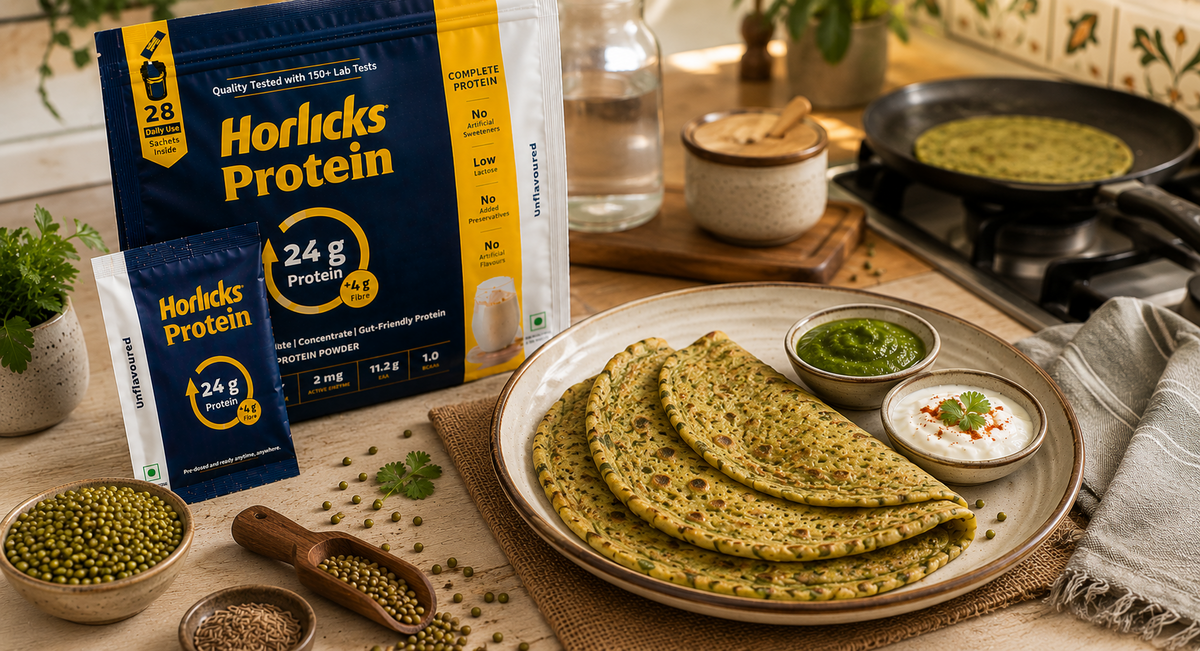
Moong dal cheela is a good example. Soak the dal the night before, blend it in the morning with ginger, cumin and water, then cook thin rounds on a hot tawa. Paneer or thick curd on the side adds another protein-containing food. The linked Horlicks recipe uses unflavoured protein powder in the batter; a home version can also be made without it. The useful idea is the same: build breakfast around a protein source, then add vegetables and whatever accompaniment makes it a meal you enjoy.
Besan cheela, idli with sambar, and leftover dal rolled into a roti are other low-drama options. None needs to be labelled a special fitness meal. The best recipe is the one that survives a weekday morning.
Give lunch and dinner a job too
At lunch, a bowl of dal is a start, not the whole plan. Pair it with curd, a chana salad, paneer, tofu or an egg if those foods suit the household. A rajma-rice plate works well with a cucumber raita. A vegetable pulao becomes more substantial with peas and a side of yogurt. Dinner can follow the same logic: keep the dish familiar, then notice whether it contains a meaningful protein source.
People often search for their daily protein requirement and then try to fit it into one large dinner. A more practical habit is to check the whole day. Needs differ by body size, activity and circumstances, so a single internet number is not a personal target. A dietitian can help when a precise intake matters.
Keep an easy option for the rushed day
Preparation helps more than novelty. Cook extra dal for the next day. Keep roasted chana in the cupboard. Set curd overnight. If a busy morning rules out cooking, a milk-and-fruit drink with a sandwich or a ready-to-eat paneer wrap can be easier than skipping food and hoping to make up for it later.
Protein powder can be used in a recipe if someone already buys it and the product directions allow that use. It is an optional ingredient, not a requirement for a balanced Indian menu. Before adding it to a shared family dish, check the pack for serving size and allergens.
The larger point is simple: spread protein-containing foods through the meals people actually eat. A cheela at breakfast, dal and curd at lunch, and paneer or chana at dinner is less exciting than a seven-day makeover, but much easier to repeat.
For a family meal, put the protein-containing item on the table rather than changing everyone’s plate in secret. Offer curd beside the pulao, keep extra dal available, or let people fill their own cheela. That makes the change visible and easier to maintain.
FAQs
Can a vegetarian Indian meal provide protein?
Yes. Pulses, dairy, soy foods, nuts and seeds all contribute. Combining different foods across the day gives more variety than relying on a single ingredient.
Is protein powder necessary in a cheela?
No. Moong or besan already contributes protein. Powder is an optional addition in a specific recipe, not the reason to make the dish.
Sources Checked: Horlicks Protein recipe library; Horlicks moong dal paneer cheela recipe.
